
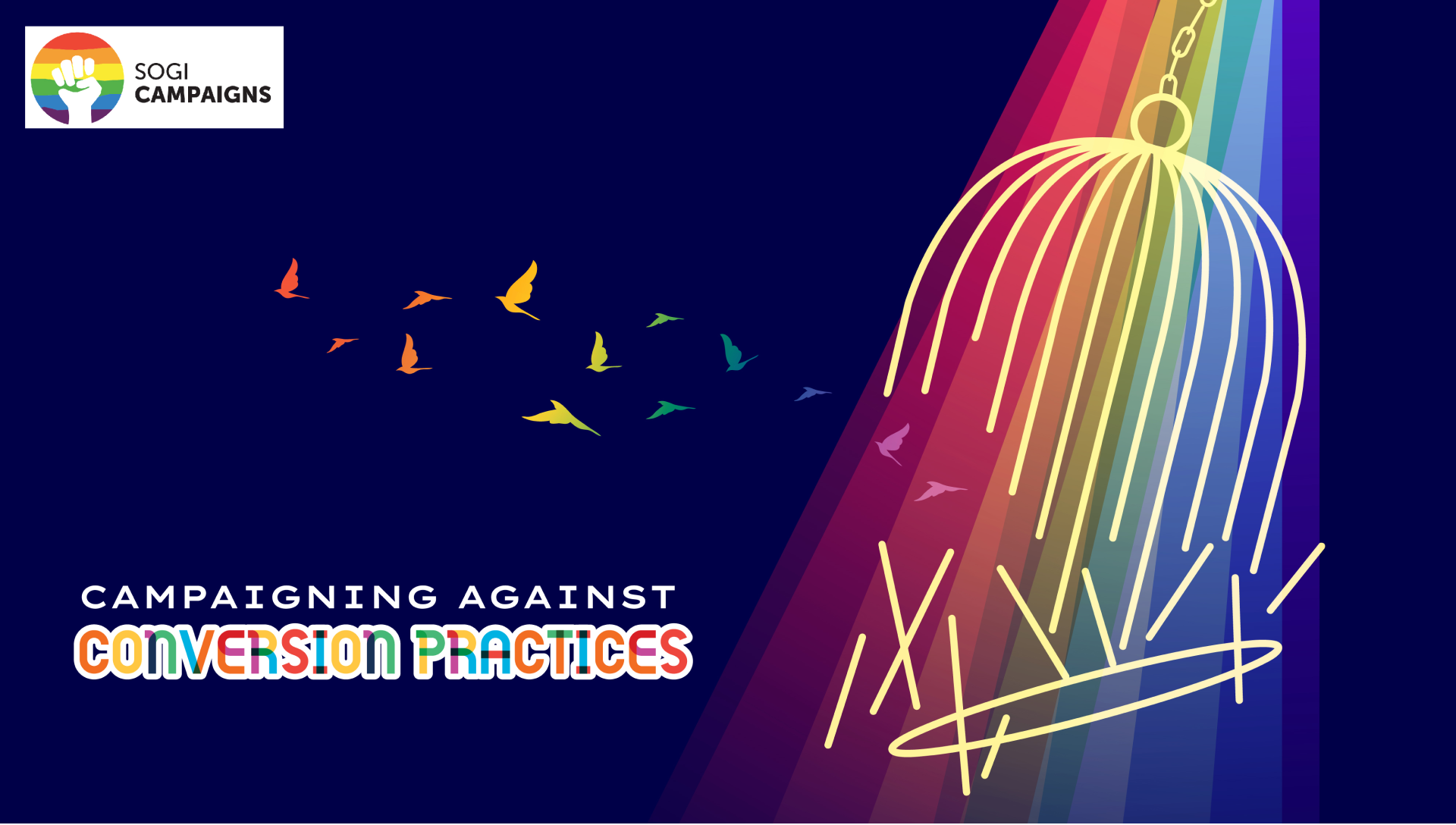

Conversion Practices are deliberate actions—whether religious, medical, familial or driven by peer pressure—aimed at changing, or suppressing someone’s sexual orientation, gender identity, or gender expression. These practices are still happening today, often quietly. They can cause lasting harm and are based on the false belief that LGBTQI+ and other people with diverse sexualities and gender expressions and identities need to be ‘fixed’.
We have chosen to use the term “Conversion Practices” rather than “Conversion Therapy”, as the reference to “therapy” suggests a legitimate scientific basis, whilst in reality there is no credible evidence. It also frames conversion attempts as immaterial, vague, and linked to freedom of expression, when in reality they amount to acts of torture.

This course offers practical guidance to help communities speak up, share their stories, and build a shared sense of safety and dignity. It is a “social change” complement to toolkits that focus on achieving legal change. Participants will be able to draft a campaign plan, prioritise target audiences, identify narrative objectives, practice message framing, and much more.
In many parts of the world, especially where civic space is limited, legal bans on conversion therapy may still be out of reach. But change does not start with laws. It starts with how we talk to each other, how we understand harm, and how we support those affected.

This toolkit is for anyone trying to resist Conversion Practices: survivors, community leaders, teachers, faith leaders, artists, friends, and LGBTQI+ individuals wishing to speak out on this issue. It might also be useful for people in countries where it is risky to speak out openly: In many communities, it’s not safe to directly call out Conversion Practices.
This course is a practical example of how to implement some of the content of three of our main courses:


While each lesson in this course provides a brief summary of the content of the main courses, it is still recommended to complete those courses in order to fully understand how they are applied in the particular context of campaigning against Conversion Practices.
What’s covered here?
Let’s walk through an open door: your campaign plan will depend on your advocacy objectives. For example, a campaign to promote a legal ban on Conversion Practices will look very different to a campaign that seeks to influence health practitioners. This is why, in this course, we approach a range of strategies and tactics that could be used across a range of campaign types. This will enable you to pick and choose whichever elements are useful for your own plan. It’s more of a toolbox than a guideline.
Another obvious pointis that all the content in this course should be checked against your context. What works here might not work there. Only good research and testing can tell you what is right or wrong in your context
How does it work?
You will be able to go through the lessons at your own pace, coming back to where you left off at any time. The course can be followed individually or in a group, where it can be used as a facilitation tool. We have created exercises for both situations.
When you enrol, you will automatically create a notebook. You can copy/paste content from the course or type your own notes. This notebook can be downloaded in PDF format at any time by opening the notes menu on the right-hand side of your screen.
Lesson plan
Before we start: Grounding Ourselves, Starting from Care
Analyse the narrative landscape and identify your narrative goals
Clearly identify target audience
Strategies to neutralise opponents
Strategies to persuade moveable middle audiences
Strategies to mobilise supporters